

|
|
|
|
|
 |
 |
|
|
Town Pounds |
|
|
||||||||||||||||||||||||
|
|
|||||||||||||||||||||||||||||
|
Brief introduction to Town Pounds Town pounds according to Sermons in Stone by Susan Allport and Town Pounds of New England by Elizabeth Banks MacRury were a part of early colonial history. In Massachusetts pounds date back to 1635. Early pounds were constructed of wood fencing. Wood-fenced pounds often had to be rebuilt. Stone-walled pounds began to replace wood pounds around 1740. By 1800 stone was the favored building material. Pounds were built to hold animals who had become a problem or that were illegally wandering around loose. Town pounds were in common use from the mid 1600’s to the late 1800’s. The town pounds that have survived represent a number of different time periods and builting techniques. Many of the pounds have been restored in 20th century. The restoration work in most cases involved resetting fallen stones from the pounds walls. The bottom sections of these walls tend to be the most reliable sections of the pound to find original construction work and techniques. A few pounds have stone lintels carved with the date of construction. Chester and Auburn, New Hampshire towns each had roman numerals used for date. Roman numerals contrast with numbers used on milestones in Chester. It would be interesting to know if this is a wide spread trend.
A viewer contact us about a town pound in Barre, MA. He stated it was east side of Broad Street South at the entrance to Masachusetts Audubon Society’s Cooks Canyon Wildlife Sanctuary.Photo can be seen at the their website - https://www.massaudubon.org/get-outdoors/wildlife-sanctuaries/cook-s-canyon/about
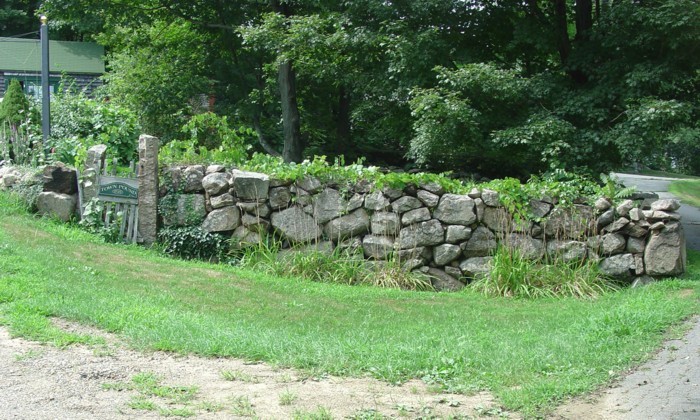
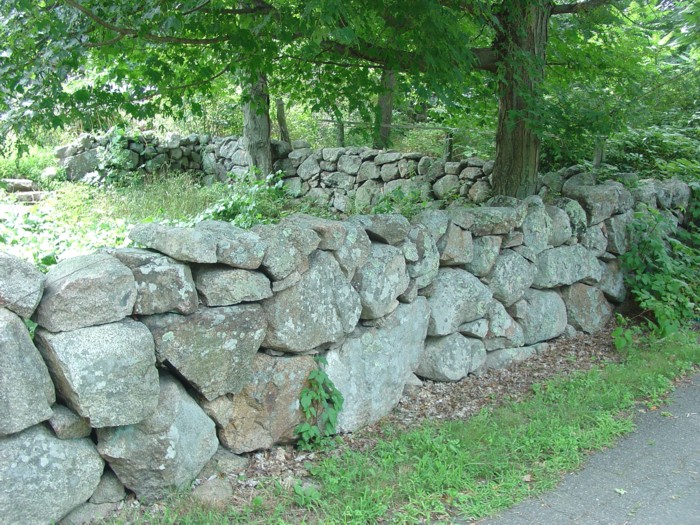
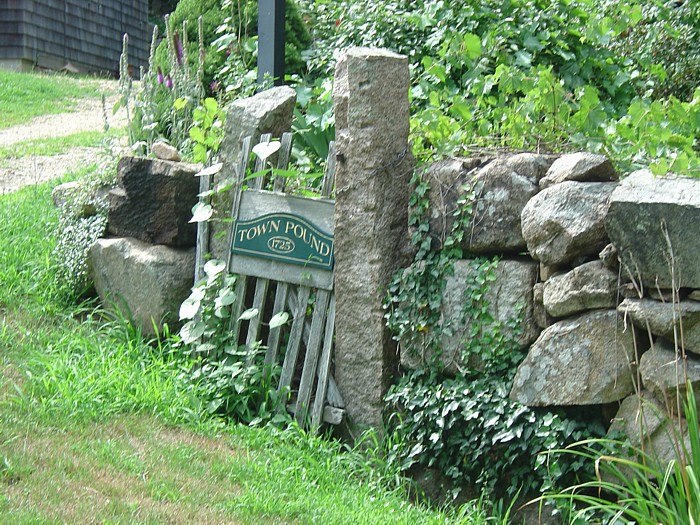
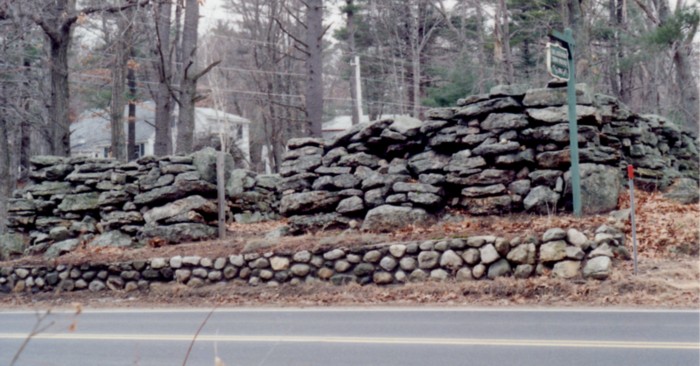
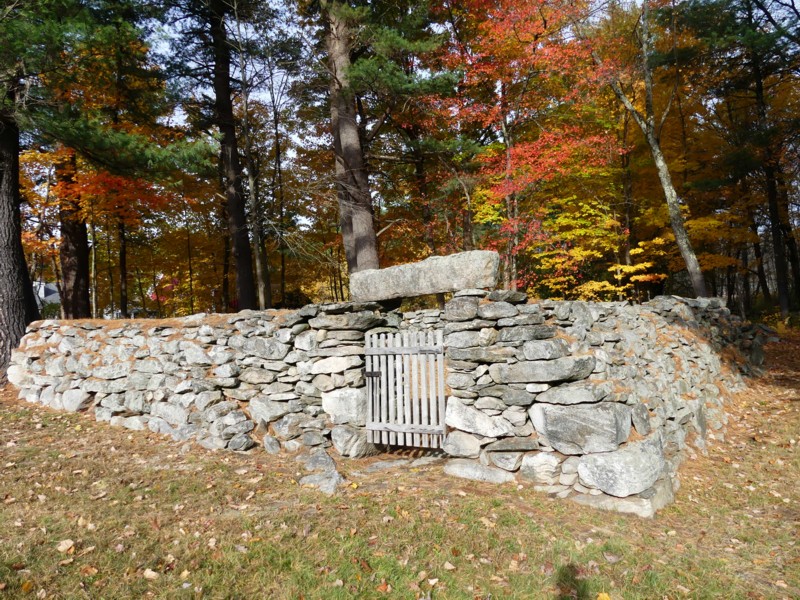
Essex, MA -This rectangular stone was built of angular blocks of granite field stones. The historic sign lists it date of construction as 1725. The two quarried gate posts are from the 1800’s. The town pound is located on the west side of route 133 just north of downtown Essex. It is on side road leading to several private residences but is visible from Rte 133 when heading north.
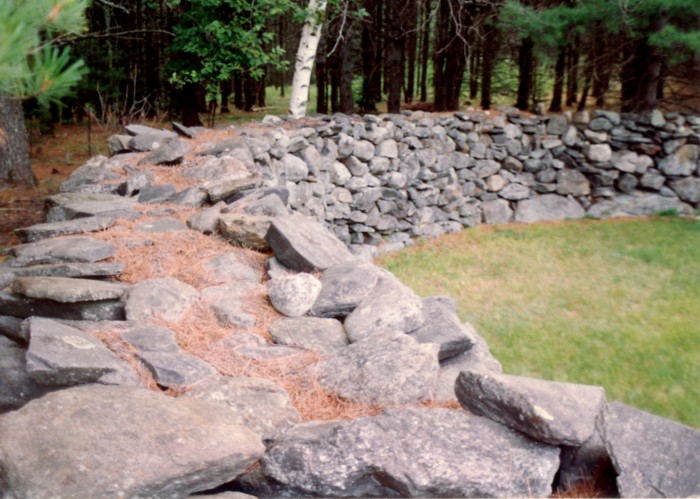
Leverett Town Pound - It is located on Montague Road across from the Leverett Elementary School. It is roughly circular in design. The left entrance wall has a trapezoid shape with the front and back walls leaning inward. It is unknown is the entire pound wall was constructed this way or not. Photographs used with permission of photographer.
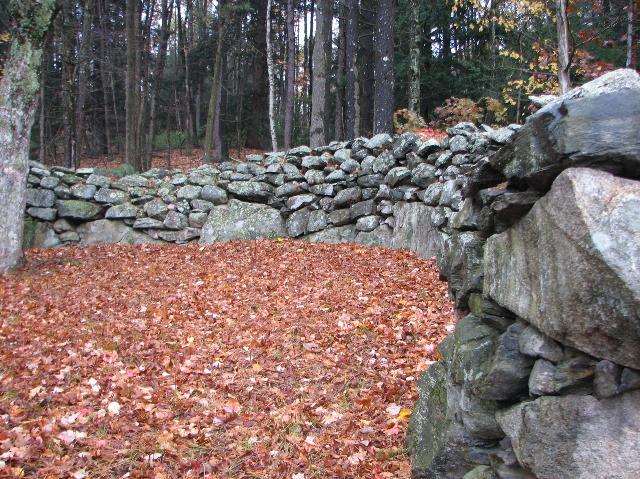
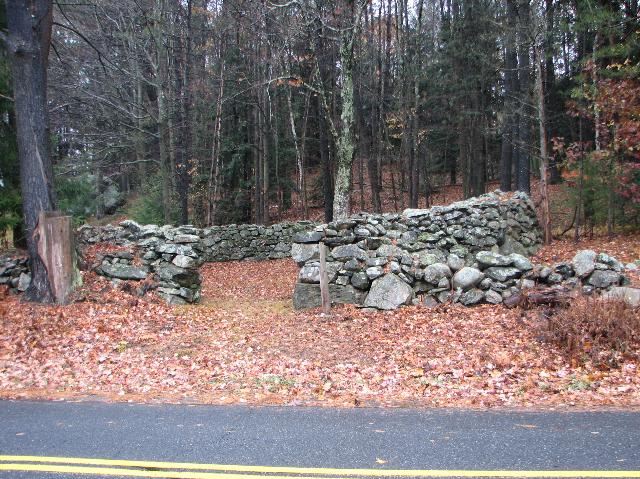
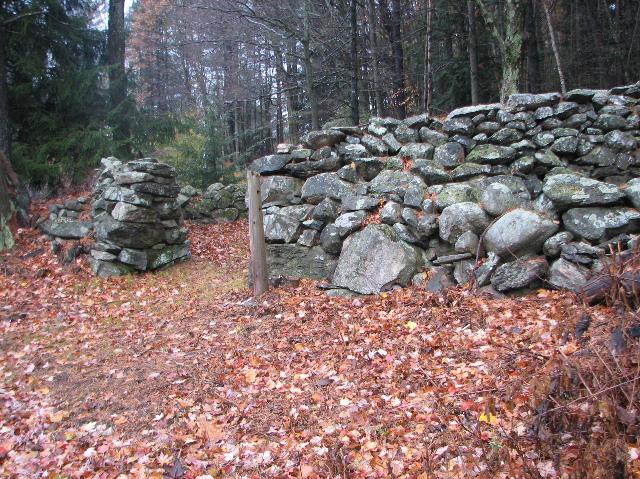
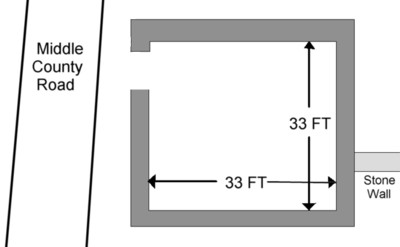
Leydon Town Pound The Leyden Town Pound is located near the top of the hill on the east side of Middle County Road. It measures 33 x 33 feet. The present owner has restored a few stones to the top of the walls; otherwise, it is an excellent state of preservation. Photographs are courtesy of the owner. When was it built? The early history of Leyden, Massachusetts is covered in the "History of the Town of Bernardston, Franklin County, Massachusetts" by Lucy C. Kellog. Ms. Kellog writes, "The next year [1764] a pound about 34 feet square was projected, but of its proposed location, or as to whether it was really built, there is nothing to determine. Upon it was expended 12 days' work and as much team work as necessary." pp. 39 Is the Leyden Town Pound the same as the one described above? The Leyden pound measures 33 feet square and the quotations says 34 feet. The 34 feet is probably a misprint. 33 feet equals 2 rods (16 1/2 ft). “Rod” was the commonly used measurement during the 18th century and was used in the same way that we use "yards" today. The square shaped layout and thick wide stone walls are typical of the late 1700's and early 1800's town pounds. The use of large stones on bottom section of the wall and then gradually smaller size stone as it nears to the top of the wall is also a consistent with this time period. The large stones would have been drag on stone sleds pulled by draft horse or oxen team and rolled off the sleds into place. The comment in the town history "as much team work as necessary" is likely a reference to the use of one or more horse / oxen teams. The stone size gradually becoming smaller with the height of the wall is a product of the maximum height a man can raise a given weight. The higher the stone need to be lifted, the lighter it needs to be. Suffice to say, the pound was built by hand without the aid of gin pole, shear pole, tripod, or other lifting devise. There is no evidence of the stone being quarried or blasted. This is consistent with a pre-1790 construction date (field stone structures continued to be built well into the late 1800's, so, this is not a diagnostic dating method by itself, but, combined with the other evidence it is useful). There see no evidence of gate hinges being attached to the entrance stonework by means of a drilled hole. The gate was probably hung on a wooden post. Although, tools for drilling round holes for adding iron hardware to stone was available in the mid 1700's, these tools were general quite rare in the American colonies prior to the 1790's. The pound has roughly 124 linear feet of stone wall. A 2 or 3 man team can built about 8-10 feet of good stone wall a day. At that rate, it would take between 12 and 15 days to construct the pound. This is once again consistent with the town history which states "upon it was expended 12 days' work". It is reasonable to conclude that Leyden Town Pound and the pound described in the town history are same.
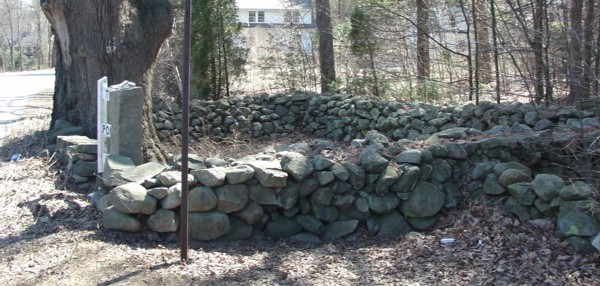
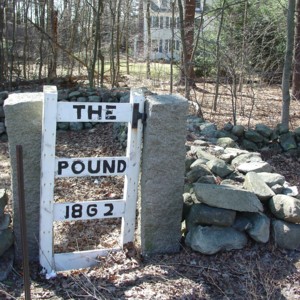
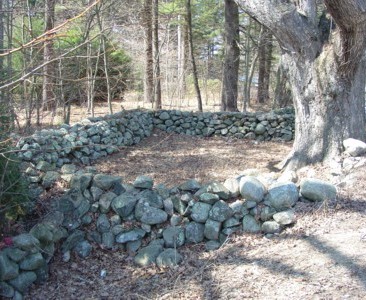
Medfield Town Pound - This 1862 town pound is located on Route 27 across from Homestead Street and a short distance from the Grist Mill. A plaque placed by the International Society of Arborculture and National Arborist Association states that this tree was alive during the American Revolution.
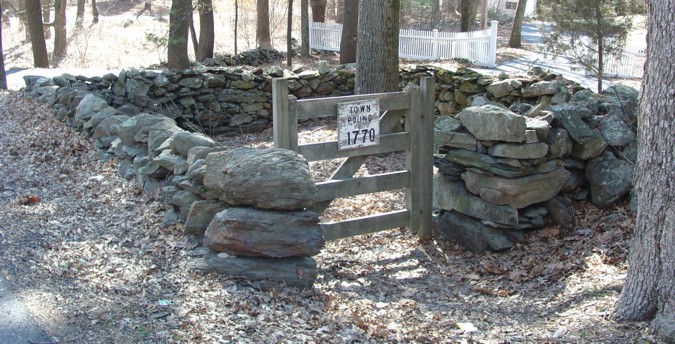
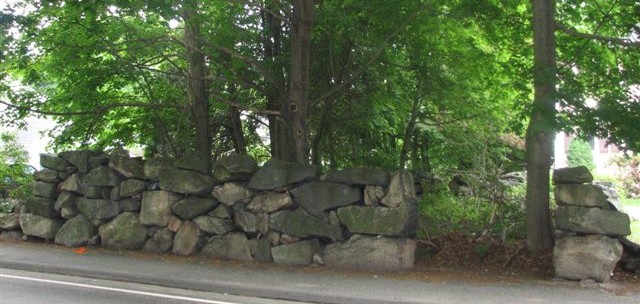
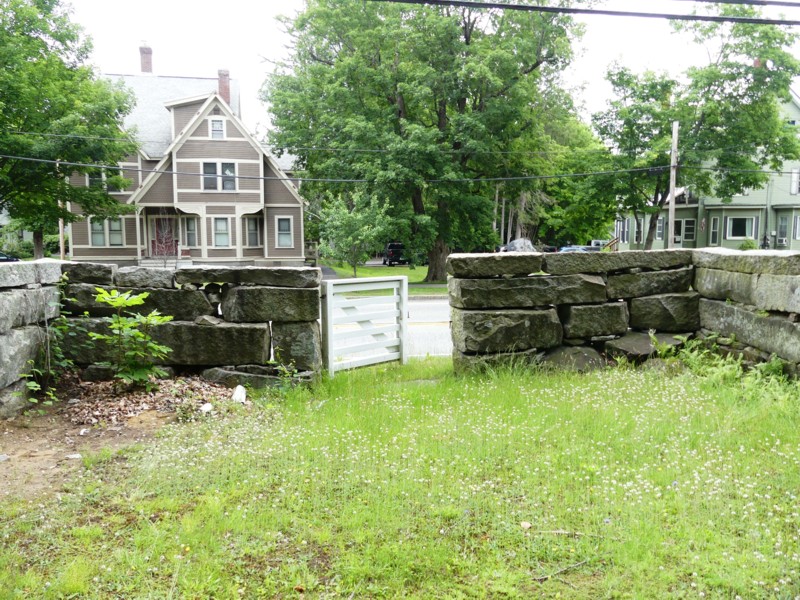
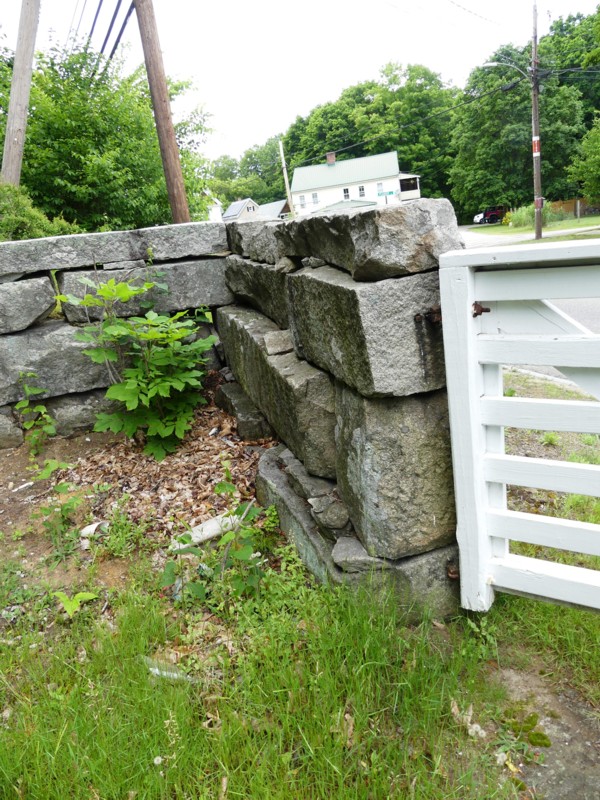
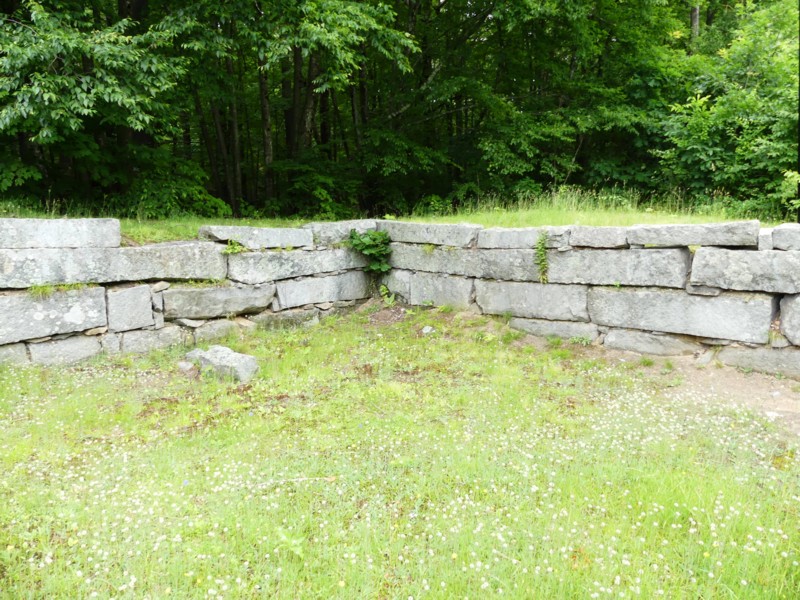
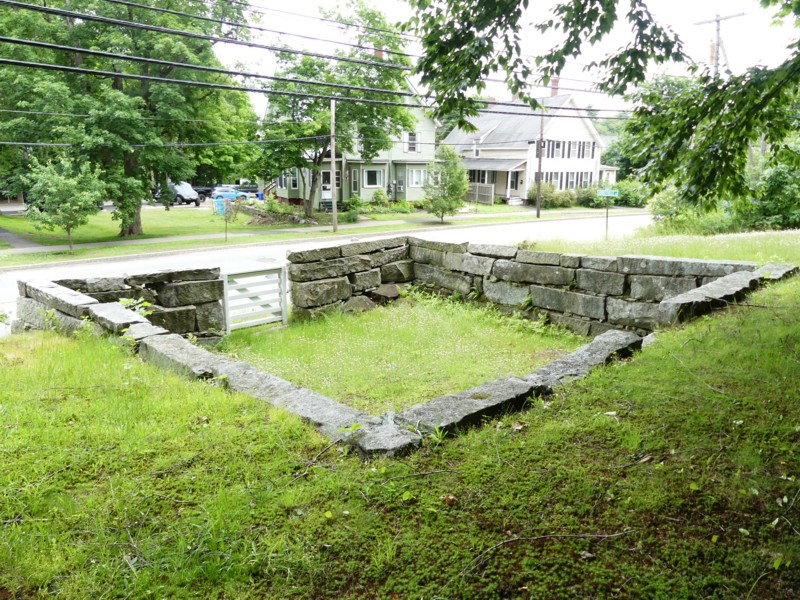
Sherborn Town Pound - Built in 1770, this pound is located on route 27. It was built using thick field stone walls. The left hand wall in the photo appears sunken because the road bed of route 27 raised the height of land on that side of the pound.
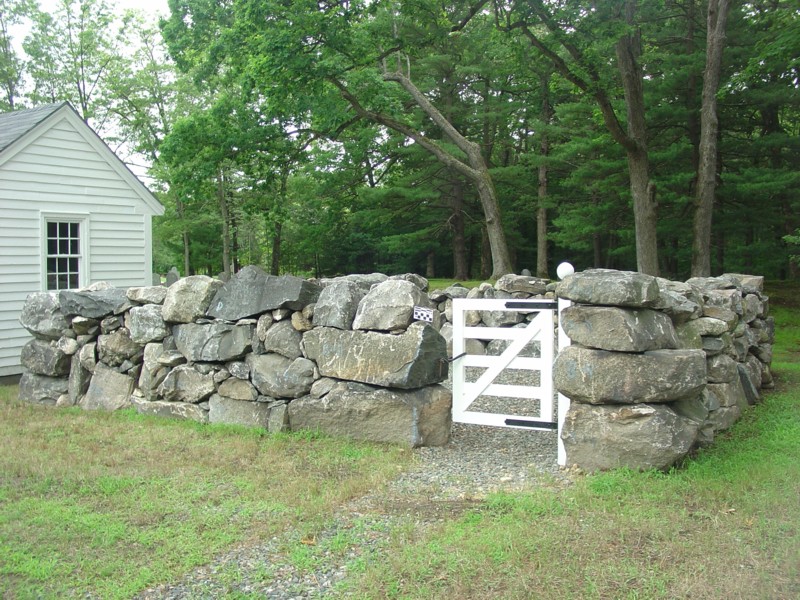
Wilmington Town Pound - It is located at 9 Glen Road and is currently privately owned. It measures 15 x 18 feet and was built in 1814 on land given to the town by William Blanchard. It replaced an earlier pound which was completely dismantled to replaced a wall on Blanchard’s property. Blanchard’s wall had been used to underpin the new meeting house. This means the 1814 pound was built using new materials. - Photograph and historical information courtesy of Ann Berghaus, Wilmington Historical Commission. UPDATE The Wilmington Town has been carefully disassembled. relocated and reassembled. It is now located on route 62 next to an historic cemetery and small historic scale house (500 feet north of junction Rte 62 & Glen Road) and across from the Wildwood Cemetery. It is open to the public. Many of the stones still have the painted numbers used for the relocation process.
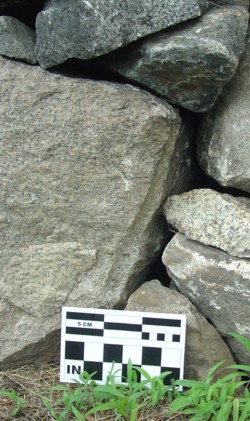
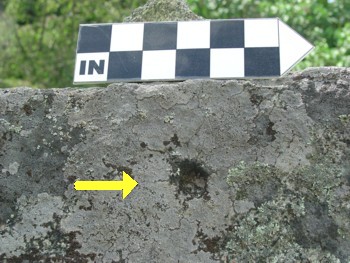
Four of stones used in the pound have blast holes. Three of stones have plug and feather round holes. All of the stones appear to be origin to the pound and therefore date to circa 1814.
Blast Hole Plug & Feather Holes
Atkinson Town Pound - It is located on Route 121 next to Feuer Lumber Co. Pound was built in 1788. Stone in bar like shapes were pried loose from surface bedrock. The date is too early for plug and feather method, therefore no quarry marks such as half holes.
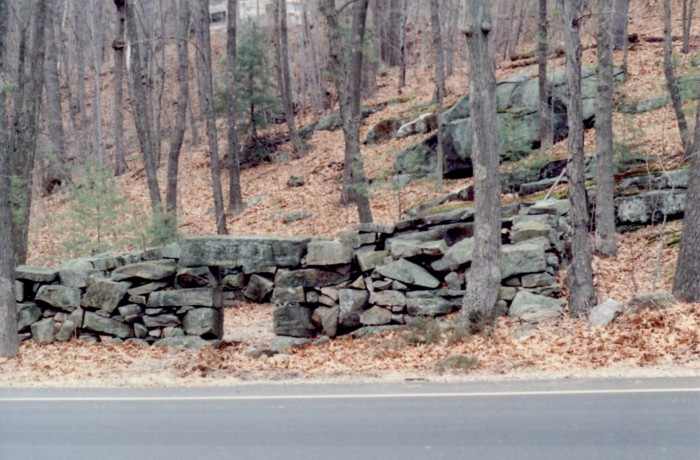
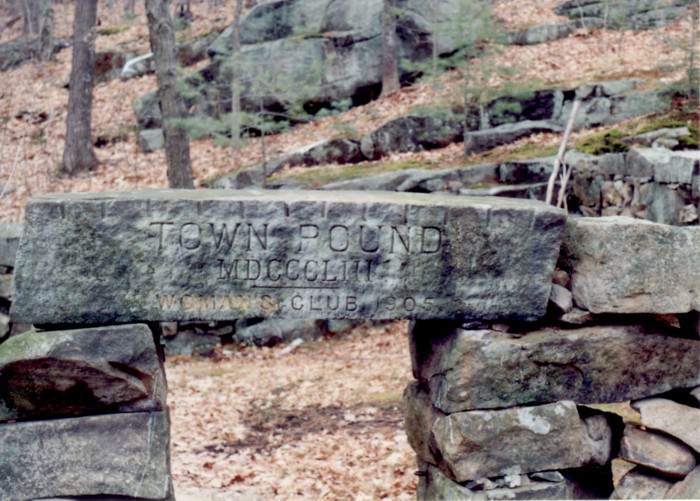
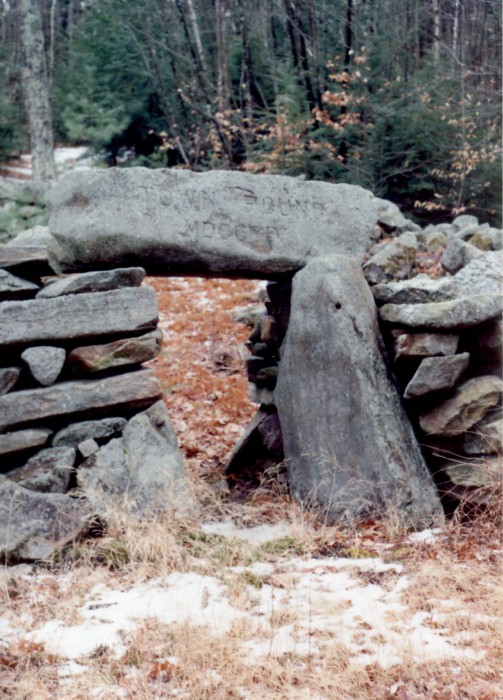
Auburn Town Pound - It is on Route 121. “MDCCLIII” was carved into the lintel over the gate. It reads 1853. This stone pound was built from quarried surface ledge stone. Note the half round holes marks on the top of the lintel stone. The stone was quarried using the commercial plug and feather method which was a common method used to quarry stone in the mid 1800’s throughout the northeast. The inscription was added in 1905 by the Woman’s Club.
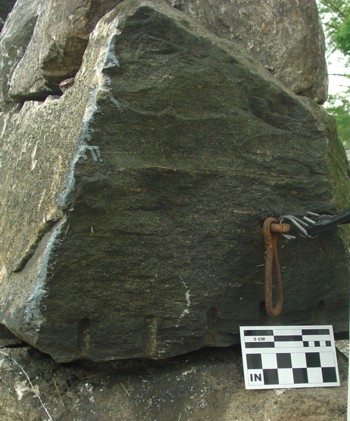
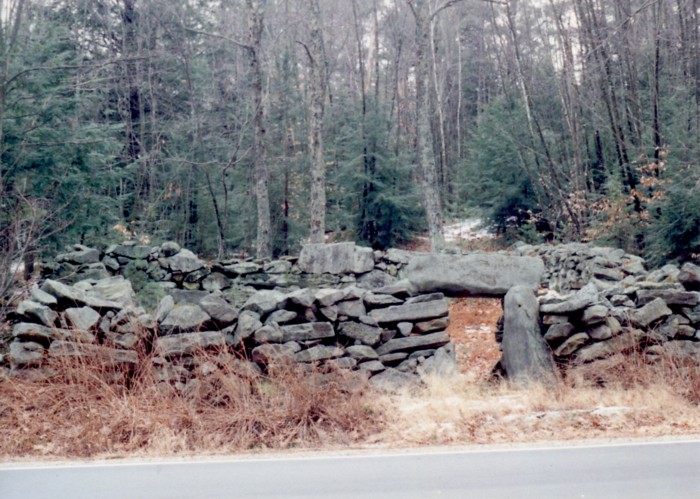
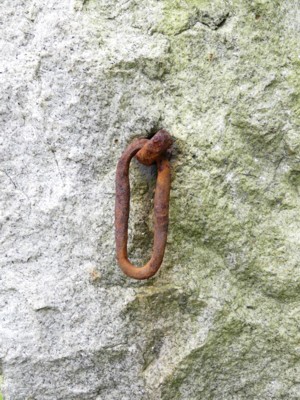
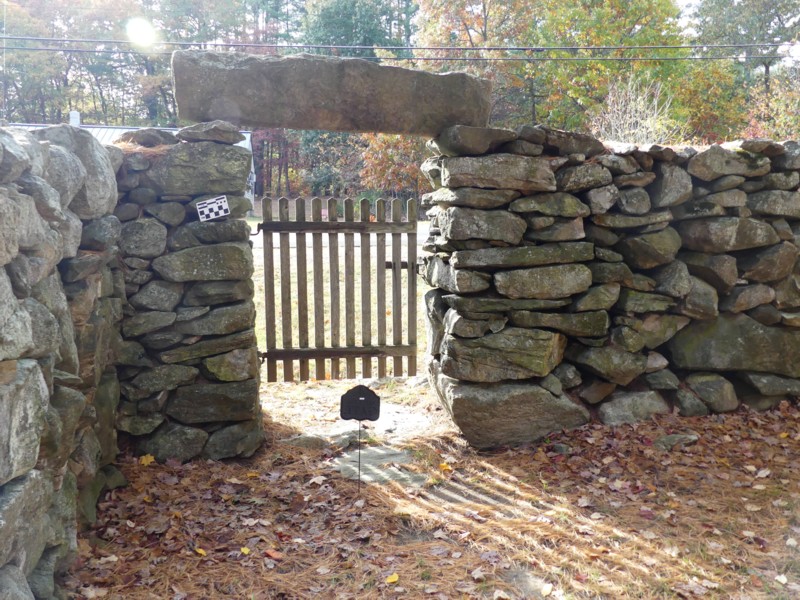
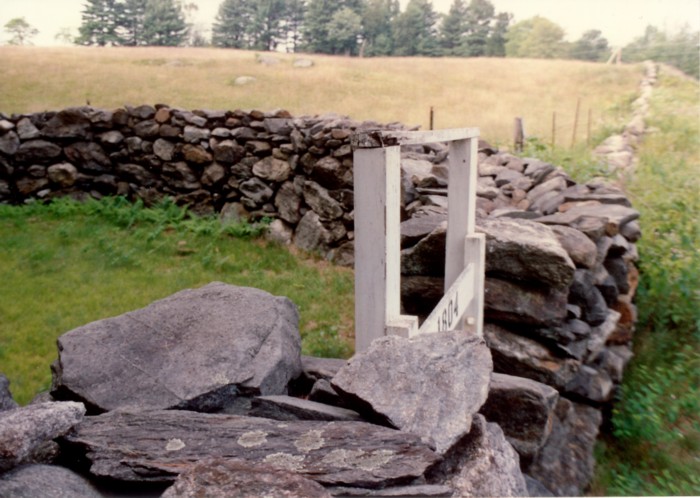
Chester Town Pound - It is located on Route 121 north of the town center. “MDCCCIV” carved into the lintel tells us the pound was built in 1804. The pound was built with field stones. The lintel stone over the gate is the only quarried stone used in the pound’s construction. The lintel was split using only two drill holes set about 2 feet apart. This splitting method was typical of the early farmer’s version of the plug and feather method (circa 1790-1805) which used only 2 to 3 drilled holes. The quarrying method is consistent with the construction date of 1804. The hole on the upright boulder on the right side of the entrance was probably used to attached the metal hinges of the gate.
Flat Wedge Method Quarry Marks
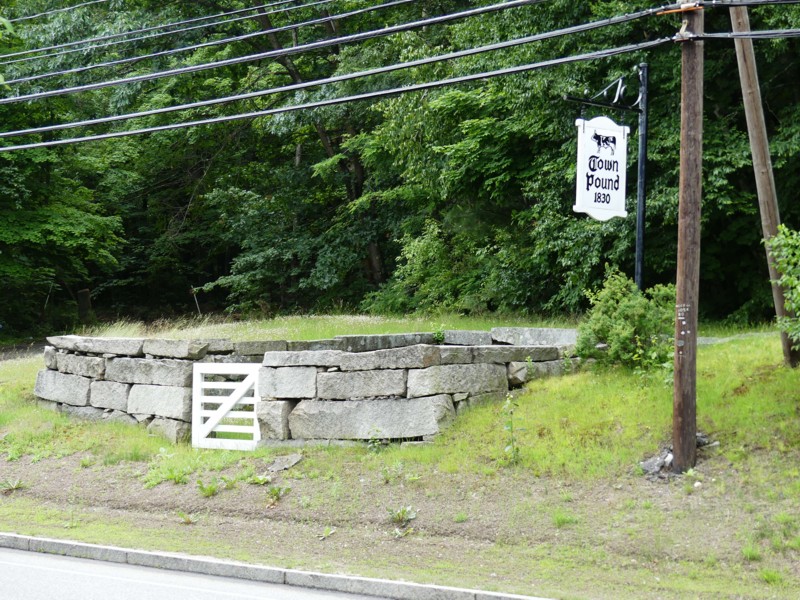
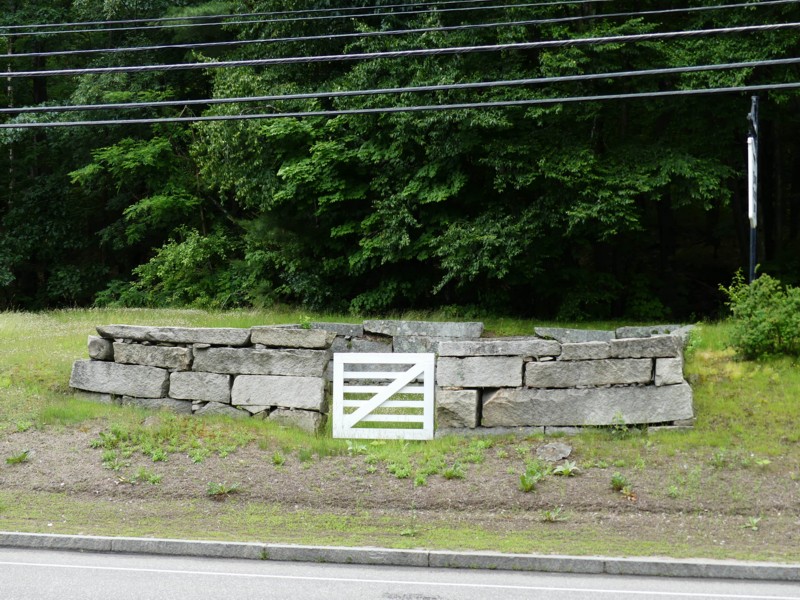
Gate hardware Concord Town Pond (1830) - It is located on North State Street (route 3) at the junction with Abbotville Road (across from Peabody Street)There is room for one car to park just behind the pound on Abbotville Road. The pound is dug into the hillside and constructed of commercially quarried granite. The granite bars were split with the flat wedge method. Numerous examples of hand cut flat wedge quarry marks can be seen on the stonework. On top of the north wall of the pound is a single piece of granite cut with the plug and feather method. This is a later repair. This piece of granite comes from the quarry directly behind the pound in the woods. The quarry post dates the pound.
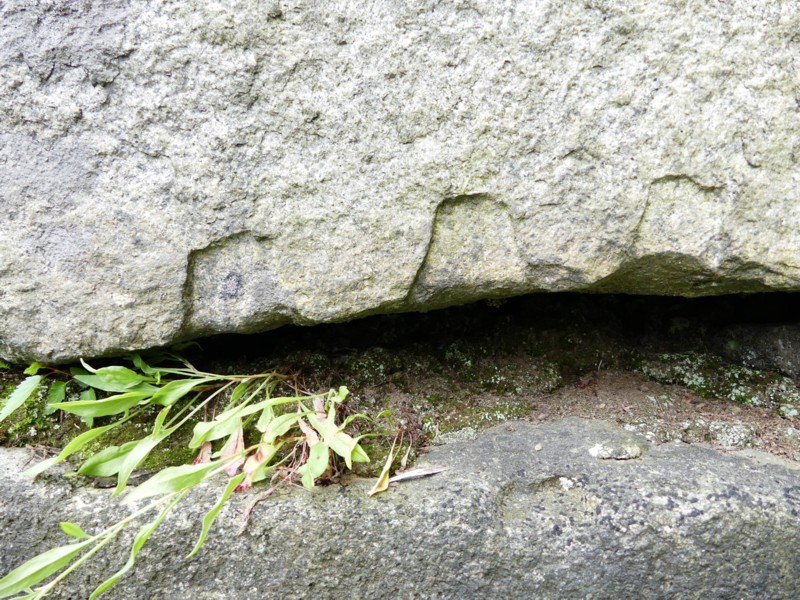
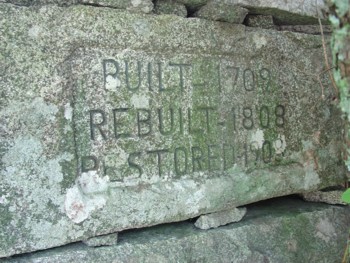
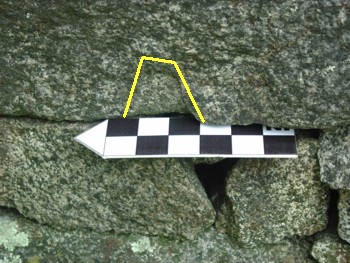
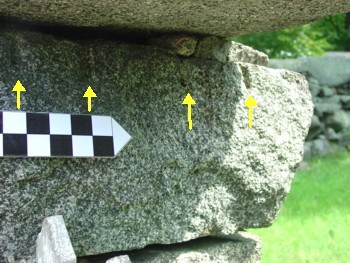
Durham Town Pound – It is located at the corner of Route 108 and Durham Point Road. The present structure was built on exposed bedrock in 1808 and replaced an earlier structure built in 1709. It is constructed of quarried granite surface ledge. Three blocks around the gate have round quarry holes (5/8” diameter, spaced 4-5” apart), the byproduct of the plug & feather method (commercial version). A number of blocks have trapezoid shaped hand cut flat wedge quarry holes. A splitting method similar in concept to the plug & feather but using flat metal wedges instead of half-rounds metal pieces. Not all of the blocks have quarry marks on them. The pound was built using some type of lifting apparatus as evidenced by the presence of “dog-holes” (5/8” dia. round hole, about 1/2 inch deep). A single dog hole was drilled on each side of the block, a metal hook inserted into the hole and a chain run between the hooks. As the chain was hoisted upward, it pulled the hooks tightly together allowing the block to be lifted. Several blocks have more than one dog-hole per side, indicating the workman misjudged the proper balance point for lifting the block with the first set of holes. Dog holes are found on blocks on the bottom, middle, and top sections of wall. The pound is 25 x 40 feet in size.
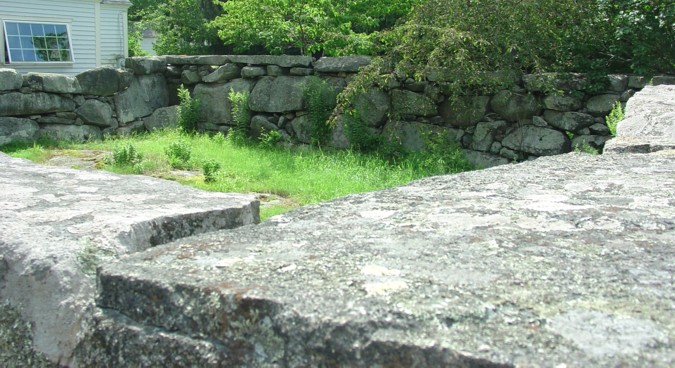
Interior view of the pound
Shallow drilled round hole known as a “dog-hole” used to lift the block into place. Inscription added in 1909 during the restoration of the pound.
Trapezoid shaped flat wedge quarry hole. Half round drilled quarry holes.
Exeter Town Pound - Exeter has had succession of different town pounds through its history built at various locations. This is the last town pound to be built in Exeter. It was built using stone slabs quarried with the commercial plug & feather method of splitting the granite. This places it construction after 1803. It is shown on a 1845 map of Exeter and therefore, it was built some tome between 1803 and 1845. (Photos courtesy of Kerry Baldridge)
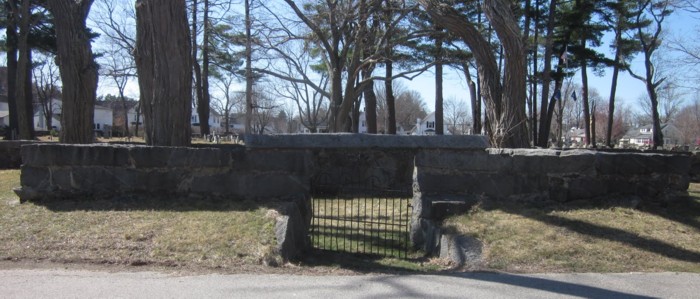
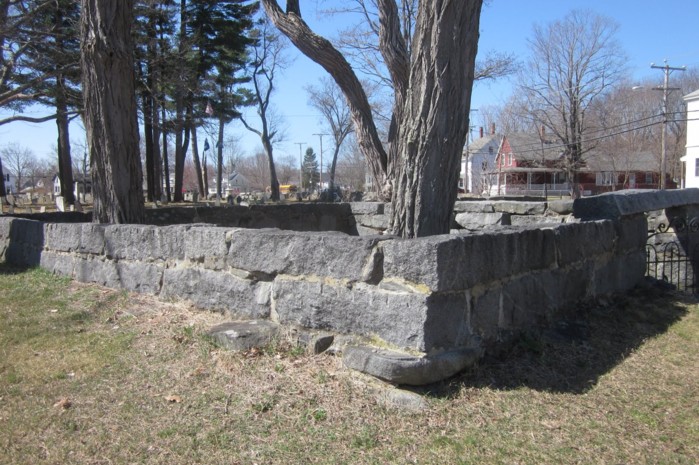
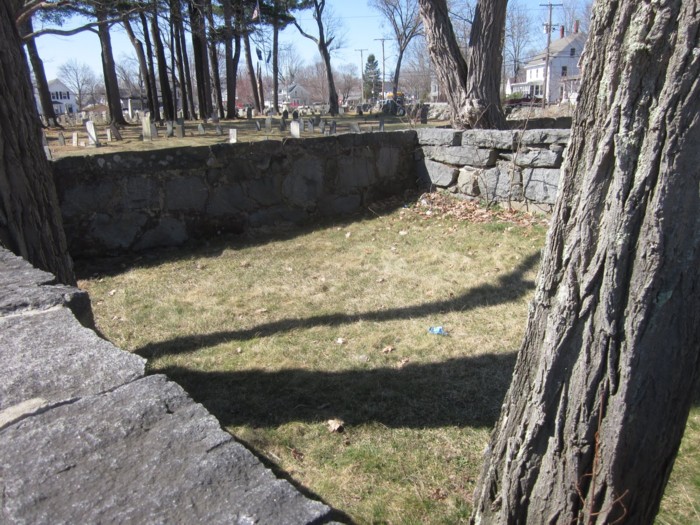
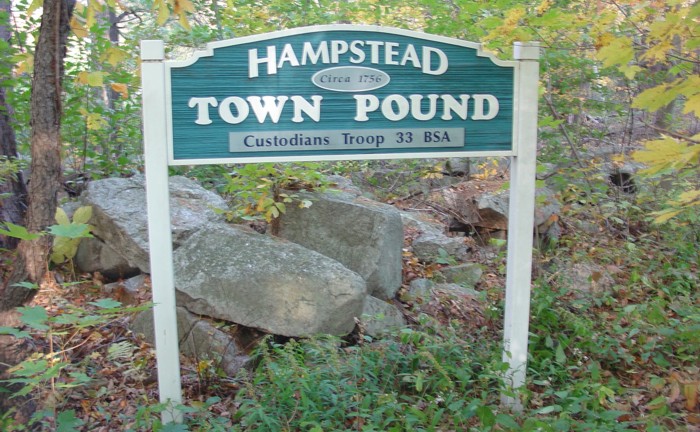
Hampstead Town Pound - It is located at the end of Old Forge Road. It off in the woods to the left of the road. There is the remains of an old stone wall line road nearby. Look for the Boy scout sign. The Londonderry town pound is located at 330 Mammoth Road. It 25 x 25 feet on the inside. It was built in 1831 by David Gilcreast. No quarry tool marks were found on any of the boulders. The lintel stone across the top of the gate is engraved with “Ye Old Londonderry Pound 1730 | Community Club 1933.” The 1730 date refers to the first town pound which this one replaced.
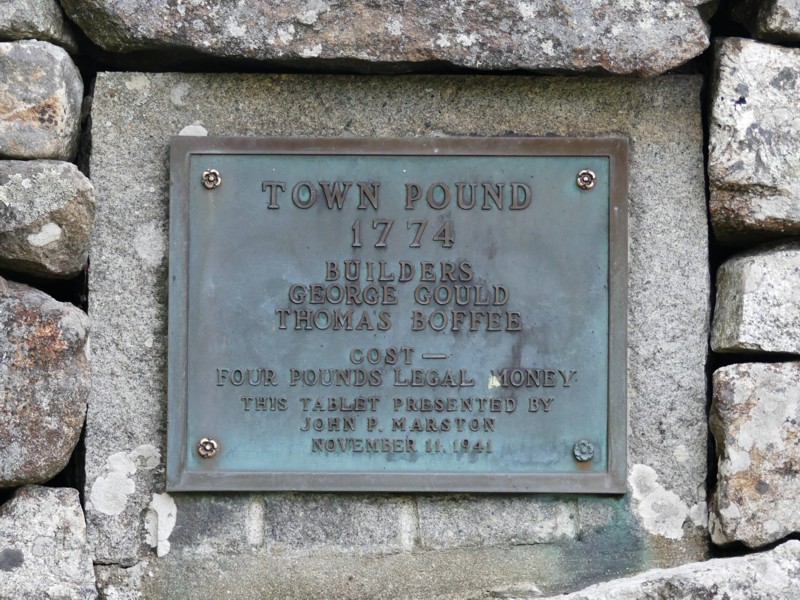
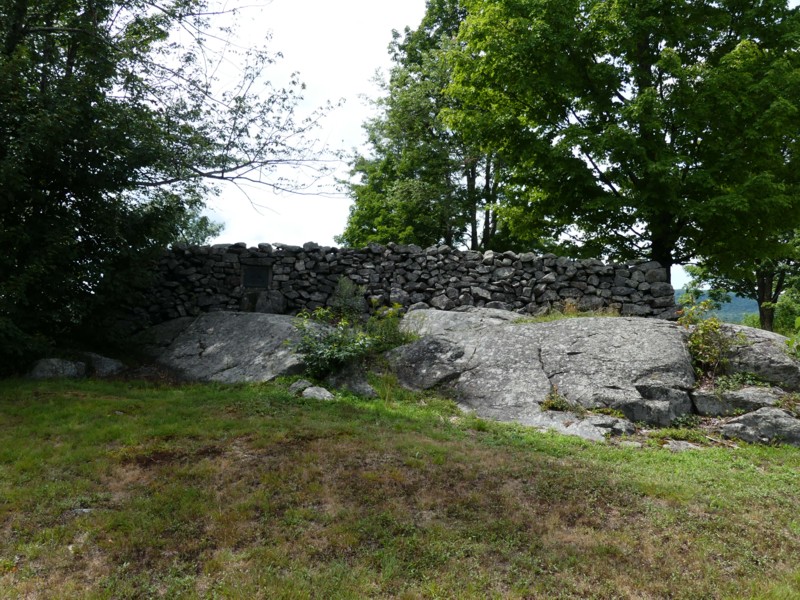
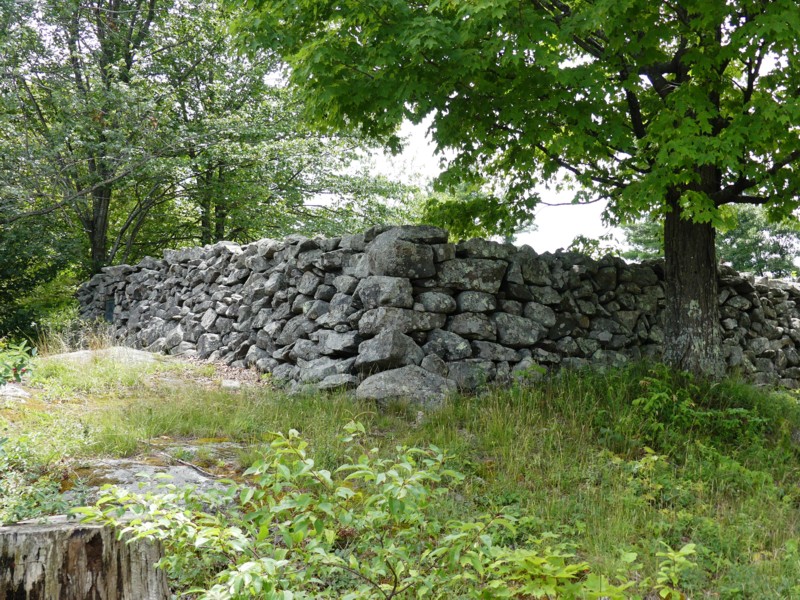
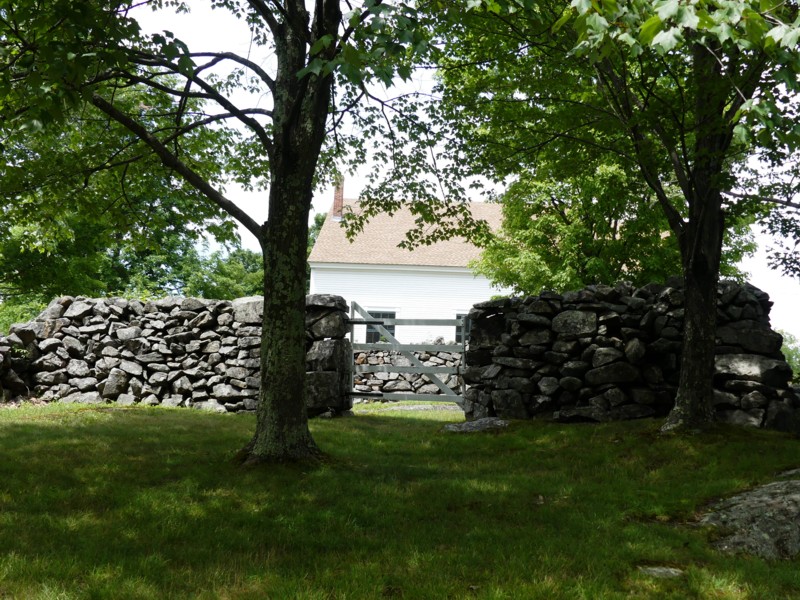
The Lyndeborough town pound is located near the town hall on Center Road. According to the plaque it was built in 1774 by George Gould and Thomas Baffee. Situated on a bedrock outcrop, It was built field stones with a wide range of sizes. We did not find any tool marks from quarry or blasting which would be consists with the 1774 date. As is typical with most poinds had thick tall walls.
Milton Town Pound – a wooden board over the gate says 1804. This is a round pound built of fieldstones. According to Town Pounds of New England the first pound was made with wood. In 1823, the town voted to rebuild the pound with stone. In 1946, the road was widened which necessitated the pound being taken down and rebuilt further back where it stands today.
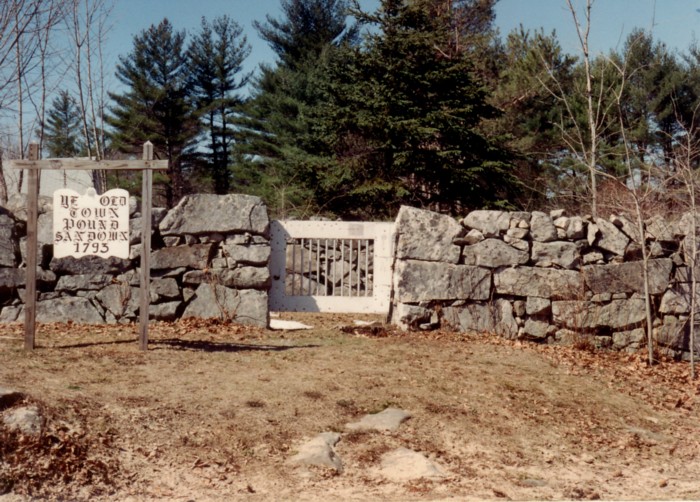
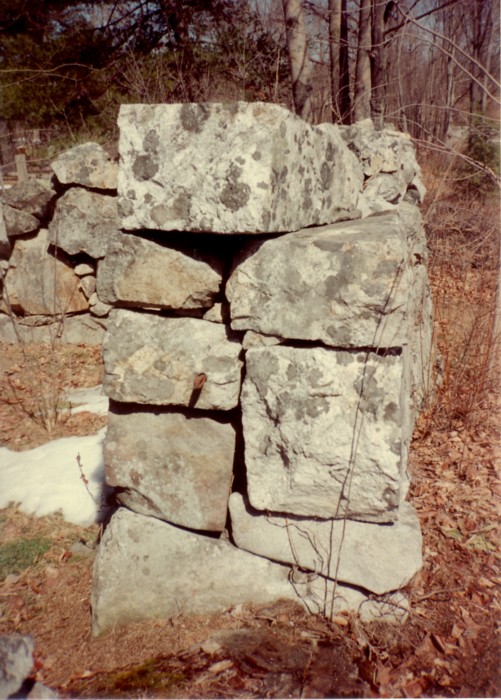
Sandown Town Poumd - The sign indicates this pound was built in 1793. It was constructed with a “double wall” using roughly squared off blocks of stone. There is no evidence of round or flat wedge quarry marks on the stones. The stone was most likely blasted from surface ledge or glacial boulders and then hammered into rough shape using mason’s hammers. This technique was used to constructed the Kings Chapel in Boston, MA completed in 1754.
Windham NH - Town Pound - It located on Lowell Street. The historic sign gives a date of circa 1861 for its construction.
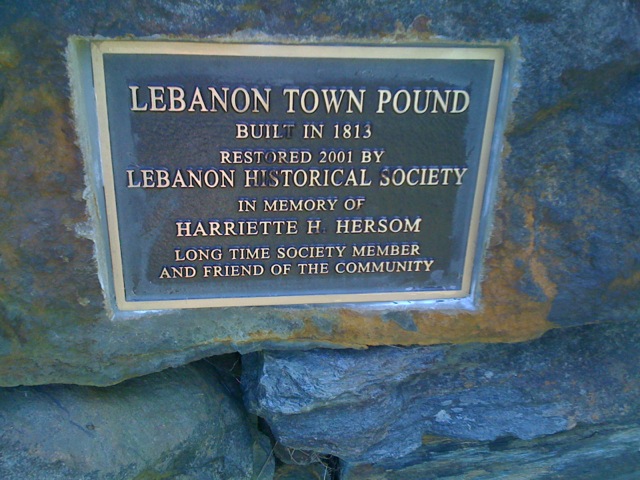
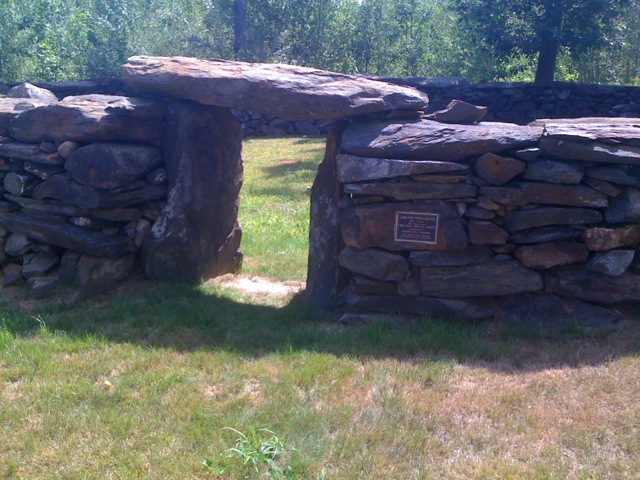
Lebanon ME - Town Pound - It located on Center Street. The historic sign gives a date of 1813 for its construction. This is a round pound with entrance topped by a lintel stone. The sides of the entrance have two stone slabs placed in a vertical position. This is unusual feature. The Chester NH town pound has a single vertical slab on one side of its entrance. Photographs courtesy of Rebecca Dean. PORTER, ME Porter ME - Town Pound - We have been informed there is a town pound in Porter dated to 1806. |
|
|
|
|
 |
|||
 |
|||