|
Plug & Feather Method Tools
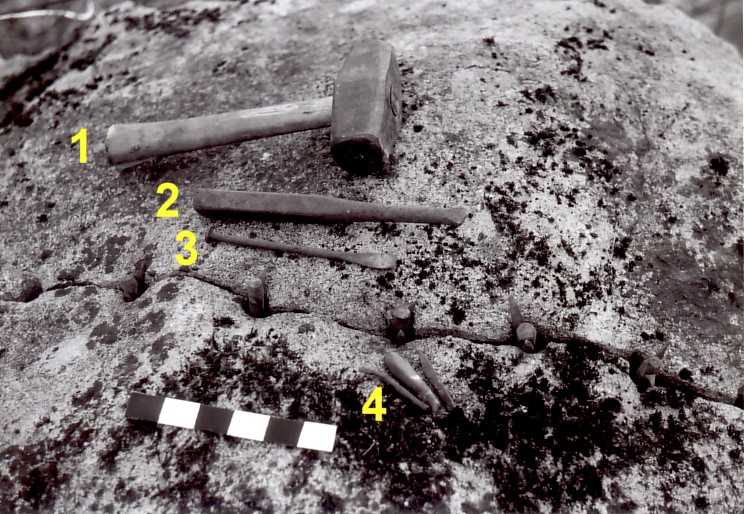
The plug & feather method of stone splitting involves drilling a series of round holes in the rock spaced every six inches or so apart. The typical round hole ranges for 1/2 inch to 1 inch in diameter and 3 to 4 inches deep. These holes are drilled using either a single bladed plug drill or a “+” shaped star drill. The drill is struck by a hammer. The stone dust which accumulates in the holes is removed using a simple tool called a spoon. Once the holes are drilled, two shims called feathers or half-rounds are placed in the hole and a wedge called a plug is placed between the two feathers.
Typical Plug & Feather Hand Splitting Tool Set
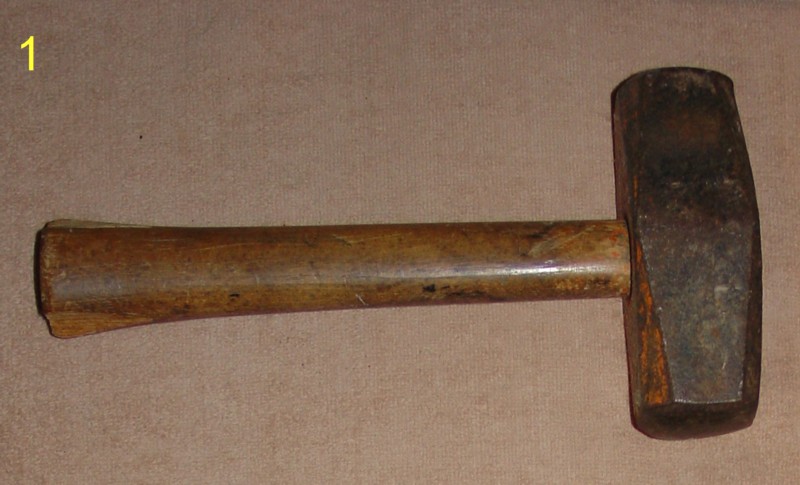
4 3/4 lb Mason’s Hammer
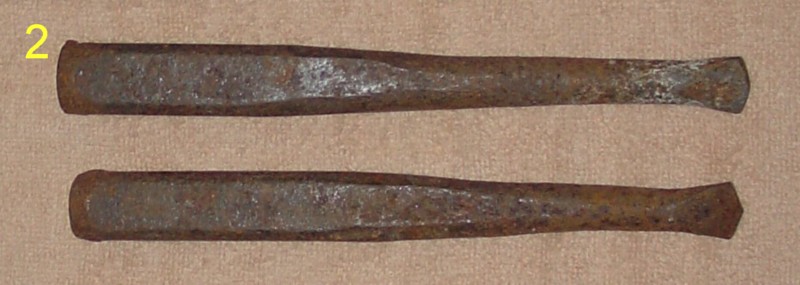
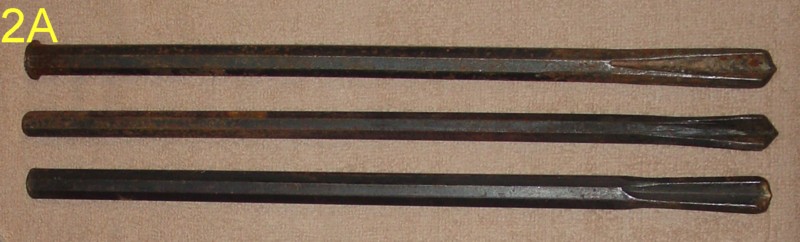
Typical Plug Drills - (Top) drill with a round blade (bottom) drill with pointed blade
Typical Star Drills
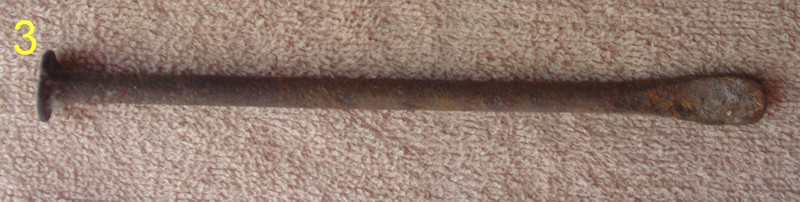
A spoon made from a nail
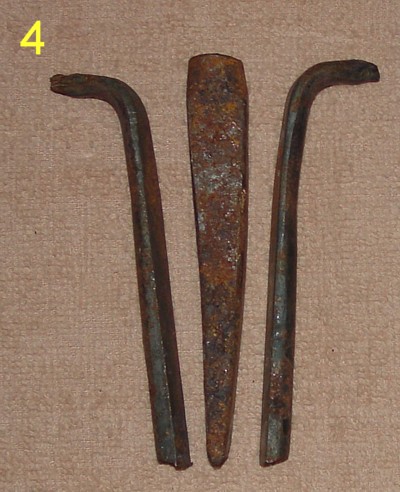
Two feathers (shims) with a plug (wedge) between them
Flat Wedge Method Tools
The flat wedge method is easily identified by the narrow trapezoid quarry holes it creates. These quarry holes are cut by a tool called a cape chisel. Into these holes a flat thin wedge is placed between two flat shims.
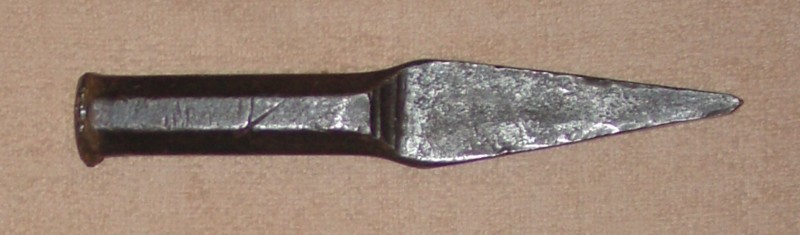
A typical hand forged cape chisel
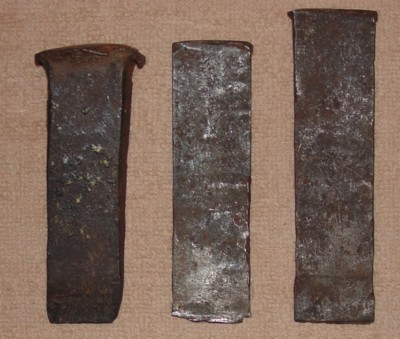
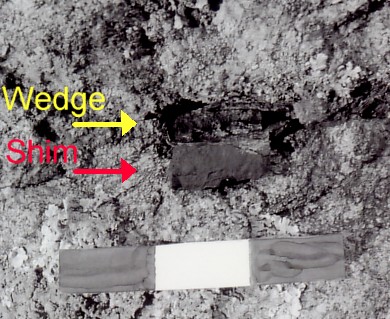
Three examples of the thin flat wedges used with the flat wedge method. No examples of shims have been located except for a pair found stuck fast in a boulder that refused to split (below).
|